


Introduction
I am in the market for a small DJ controller. Something I can use sitting at my desk as an alternative to the full sized controller I have in another room, or chuck in a bag to take to a mate’s house party.
None of the commercial manufacturers sell a device which quite suits my needs and wants, which lead me down the path of exploring DIY alternatives. I was excited to discover a nascent community building projects which, it seems to me, have the potential to disrupt the commercial equipment market as these projects iterate and converge.
The Market
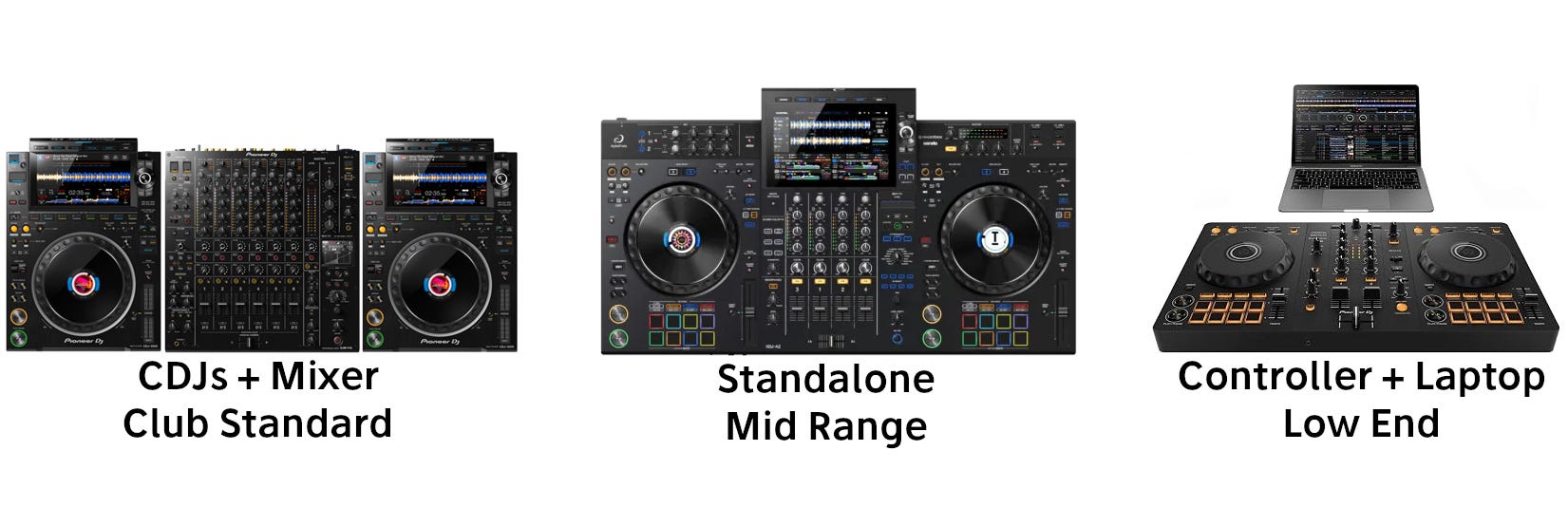
A broad selection of commercial equipment services the DJ market. Broadly, the market consists of three tiers:
At the high end the “club standard” DJ rig is dominated by CDJs running an embedded DJing application compatible with the Rekordbox software.
In the mid range “standalone / all-in-one” systems are common in smaller venues and amongst professional DJs practising and preparing their sets, devices which run Rekordbox (or alternative software) on the device itself.
At the low end are DJ “controllers” common amongst amateurs and bedroom DJs which require a laptop to run the DJing software application and often, connect the analogue audio outputs.
The low end represents the largest segment of the market. Demand within that segment for an Single Board Computer (SBC) system to replicate the all-in-one capabilities of a standalone controller has grown substantially over recent months as commercial products became available. Manufacturers such as Stembox and Deckshark are selling small bolt-on touchscreen devices to DJs wishing to replace their laptops with something more self-contained and portable.
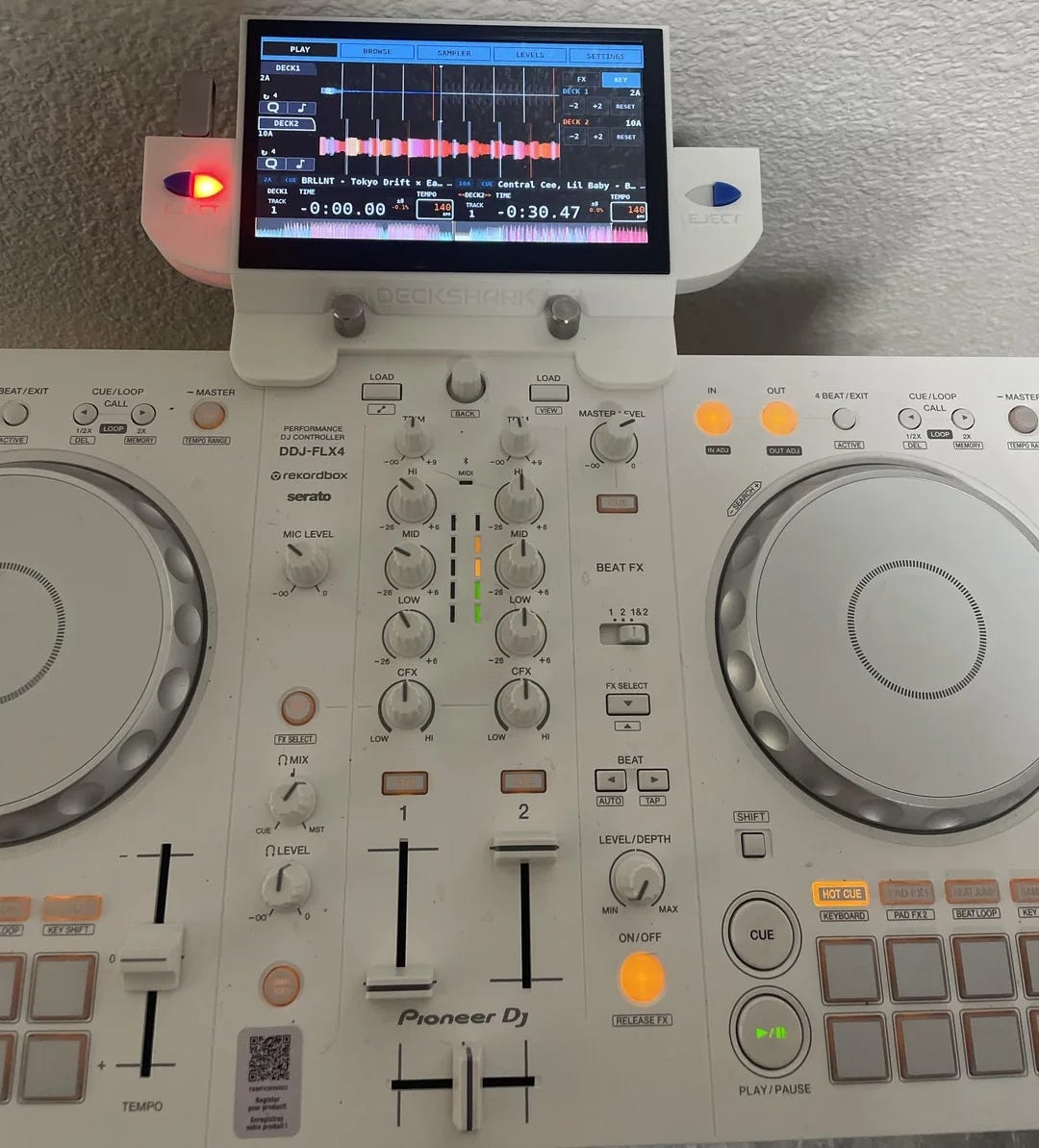
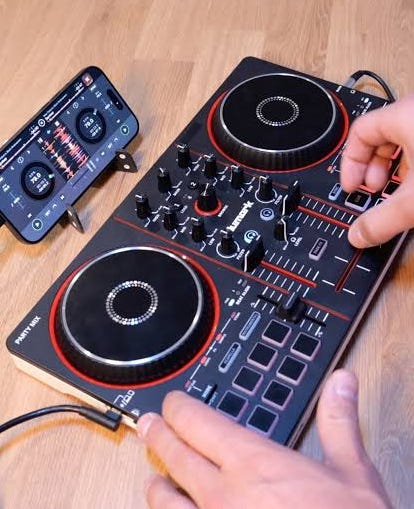
Portability is a key feature. The smallest controllers are roughly the dimensions of an A4 book, some small enough to fit in a trouser pocket. These devices are the perfect form factor for the amateur DJ wishing to play someone’s house party but still require a separate device to run the DJing software.
These controllers sacrifice features to achieve the physical minimisation, notably three-band Equalisation and Gain control. Controller manufacturers offer other features on these devices instead, features many would consider superfluous such as STEM controls and flashing light displays. The SBC manufacturers seem reluctant to target these portable controllers due one might suspect, to the absence of these fundamental capabilities.
The Open Source Opportunity
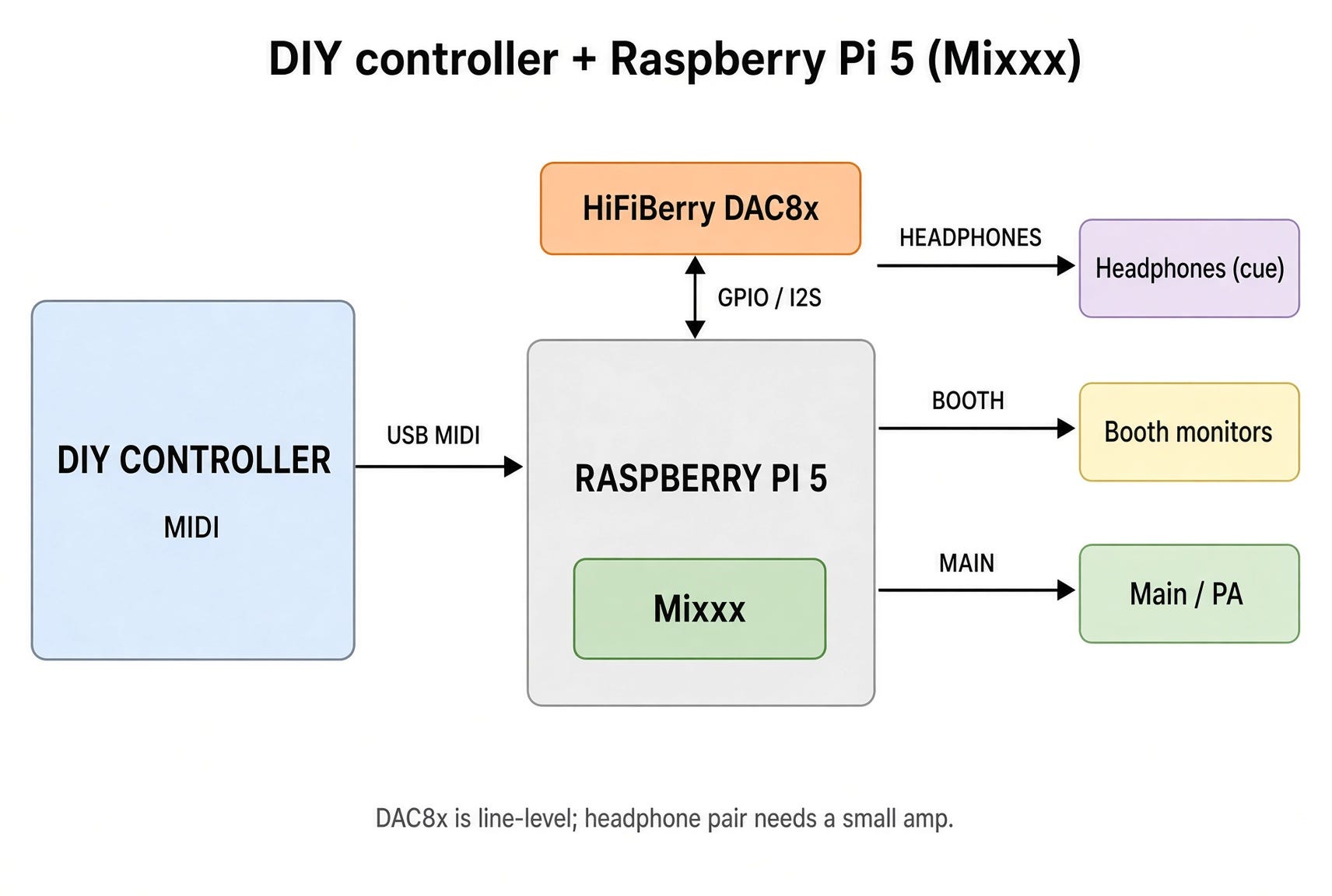
A modular, portable, entry level, standalone controller would consist of three components:
DJ Controller + SBC + DJ Software
The SBC requires a touchscreen interface and one of the hardware components, preferably the SBC, requires two (preferably three) analogue stereo outputs.
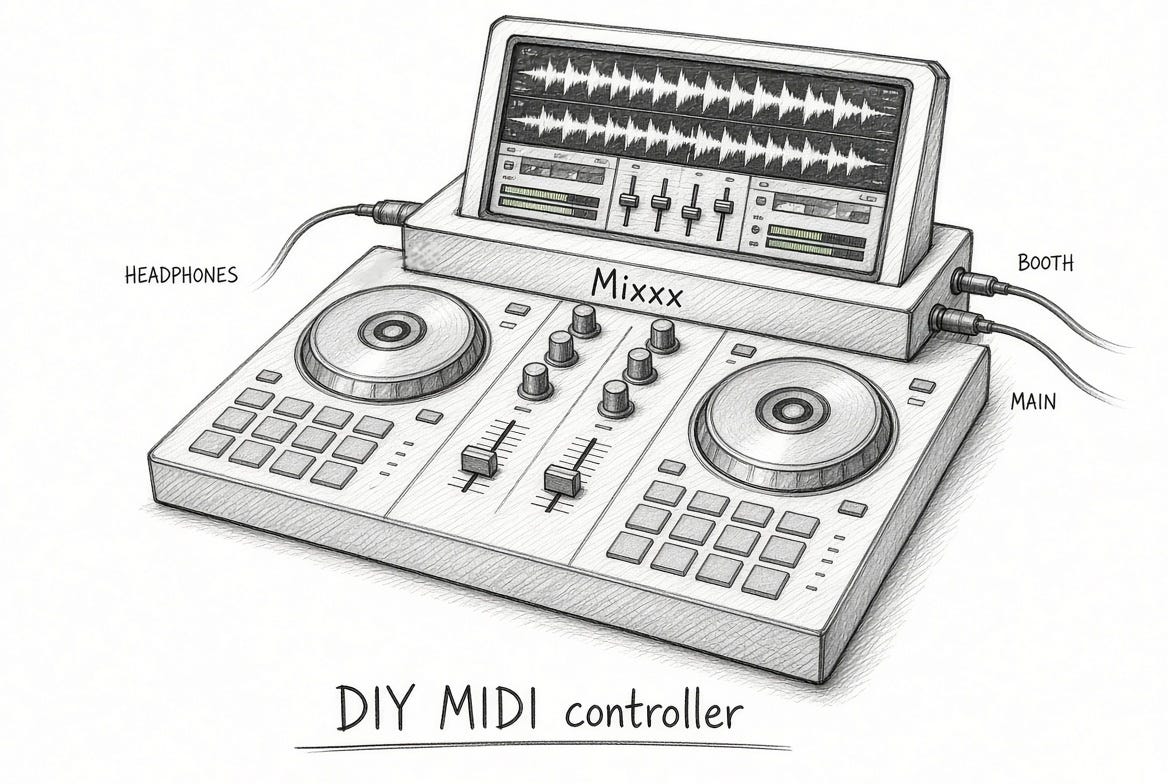
Crucially, the Open Source and Open Hardware communities have already developed each of these components, creating the opportunity to combine them into a viable product. I will assess the progress of some of these projects below, in support of my argument that their convergence would provide a solution to an under-serviced niche with the potential to disrupt the low end DJ market.
The following diagram is a visual representation of a potential target architecture I have in mind. A key aspect here is it’s modular. Prefer Pioneer’s DDJ-FLX4? Swap it in for the DIY controller. Raspberry Pi 5 lacks grunt? Swap in a Nucbox. Want higher resolution audio? Replace the HiFiBerry with Orchard Audio or and Audio interface. Presented here is my approach to a minimum viable product.
The Solution
In this section I’ll discuss the progress of some in-flight projects and assess their viability and deficiencies.
Software
The software solution is obvious: Mixxx or its derivatives. The venerable software (it’s 25 years old) is the premiere alternative to commercial DJing software. Cross-platform, it runs natively on the Linux OS preferred for lightweight SBC systems.
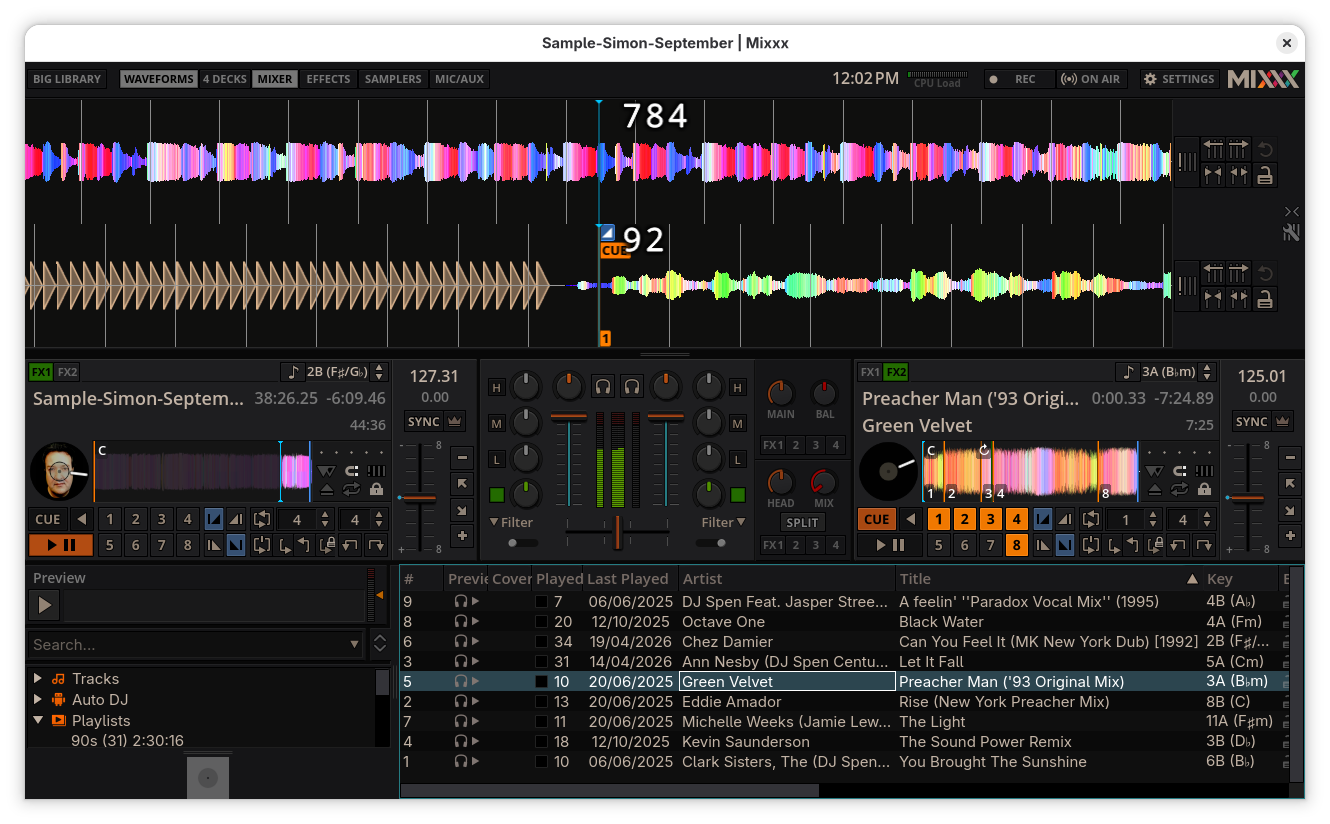
Mixxx’s viability is diminished by its reliance upon the antiquated QWidget interface framework released back in the 90s, still present in the latest stable release at the time of writing, version 2.5.6.
The processing overhead of the QWidget framework is sub-optimal for SBC systems and difficult to scale for small and touch screens. These deficiencies have lead to forks of the Mixxx codebase such as BiteDJ which strip out the non-Linux components and add in a small screen interface “skin” for use in their Deckshark Mako SBC. As things stand right now the BiteDJ fork is the leading candidate for the SBC form factor.
The Mixxx project itself has a programme of work to address these deficiencies with the upcoming release of version 3.0 replacing the QWidget framework with a modern UI alternative, QML. The introduction of QML should radically improve performance on SBCs and will facilitate scalable interfaces for devices such as phones, tablets and touchscreens.
Verdict:
BiteDJ is viable now, Mixxx 3.0 (release date unknown) is optimal.
Controller
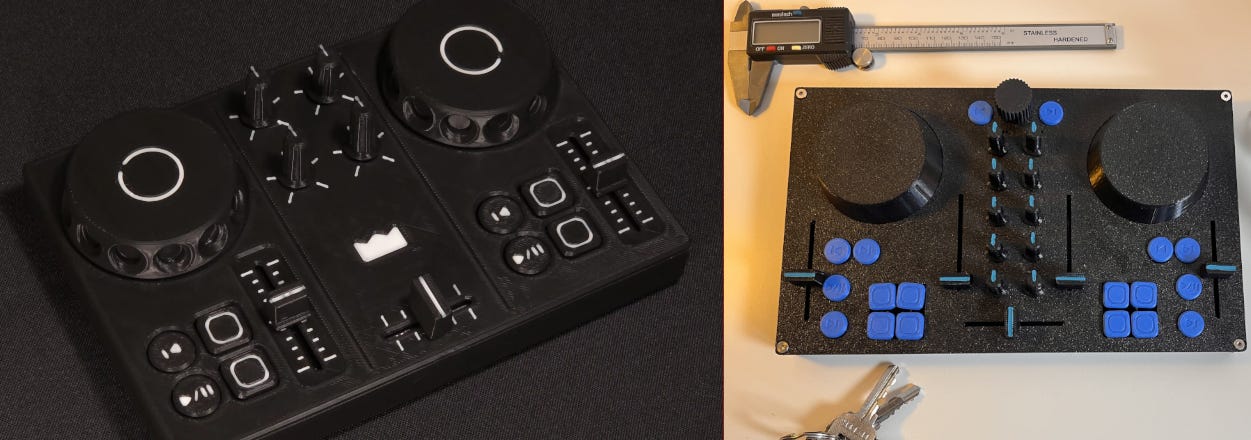
This is the category I’m most excited about despite how crude these devices appear and how much you’re laughing at me. They are simple MIDI controllers using 3D printed parts, generic electronic components and Arduino boards which have progressed beyond the stage of working prototype to the testing and refinement stage.
With caveats, both of the DIY controllers pictured here fulfil the requirements of my personal use-case right now. Subsequent iterations will exceed them.
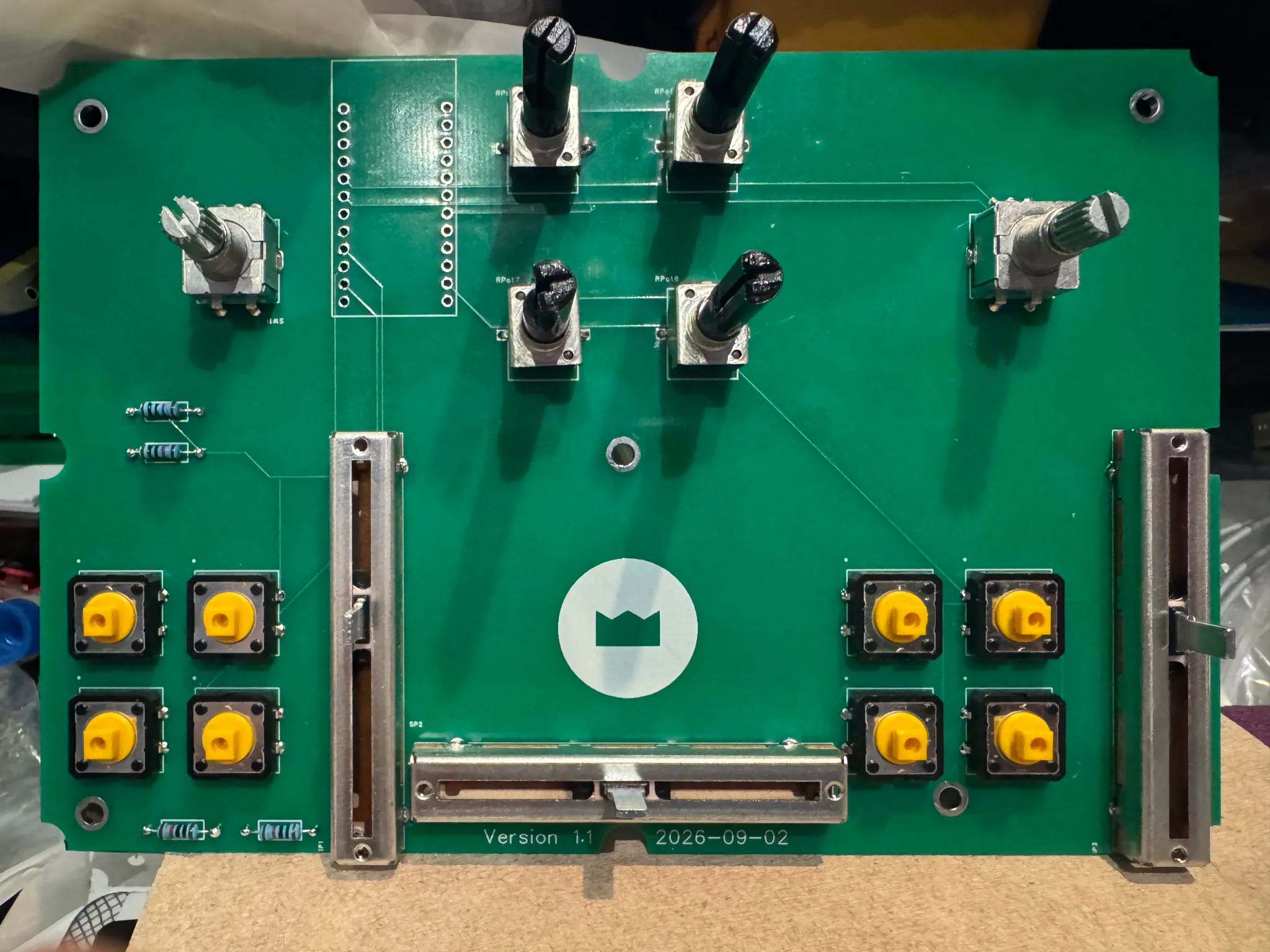
Option 1 - MandicLab DJC-DIY Controller
The MandicLab controller has progressed furthest along the development path, thoroughly documented at the project’s GitHub repository.
The controller is small and has made similar functionality sacrifices to the portable controllers sold commercially, notably the absence of 3-Band equalisation and the number of available performance pads. Despite these limitations the device is usable for a performance, and someone actually has.
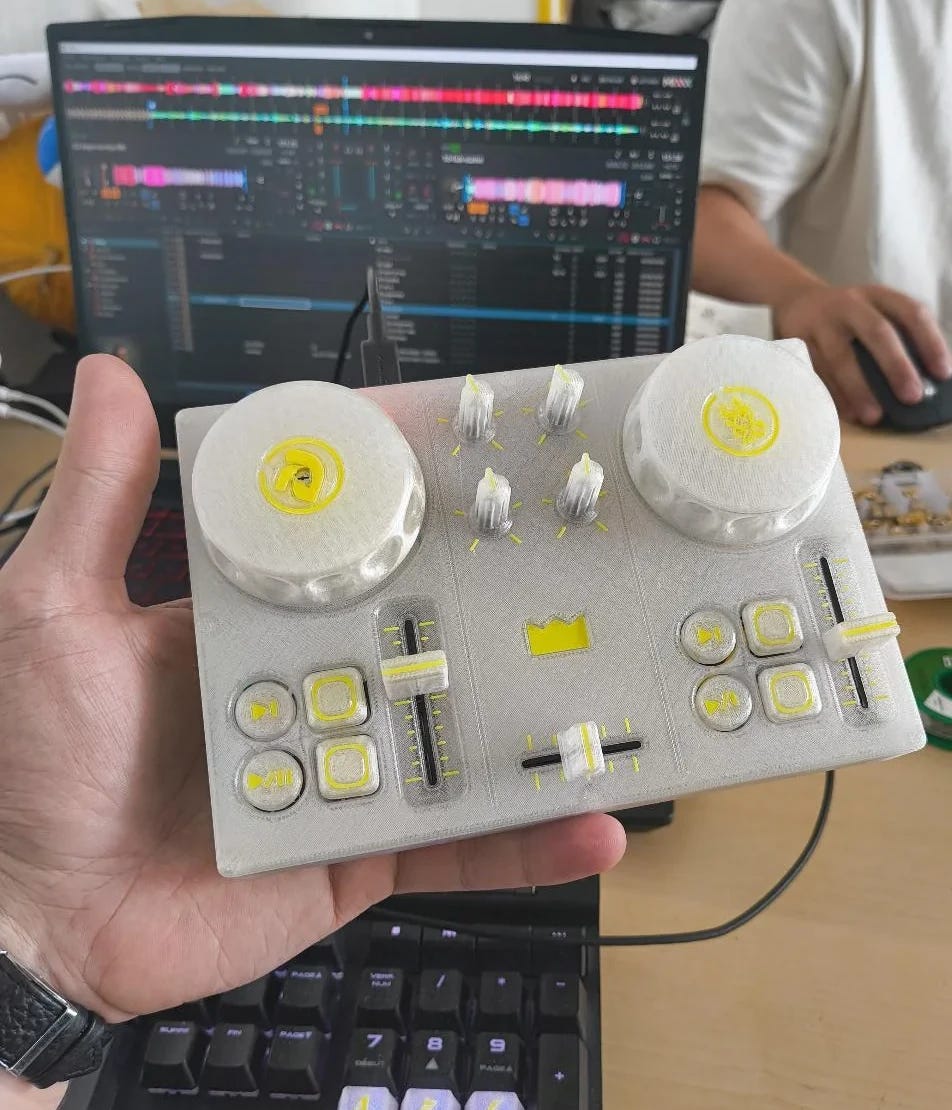
The MandicLab device has progressed beyond point-to-point wiring to a PCB. This is a critical hurdle to have crossed, increasing the attainability for enthusiasts.
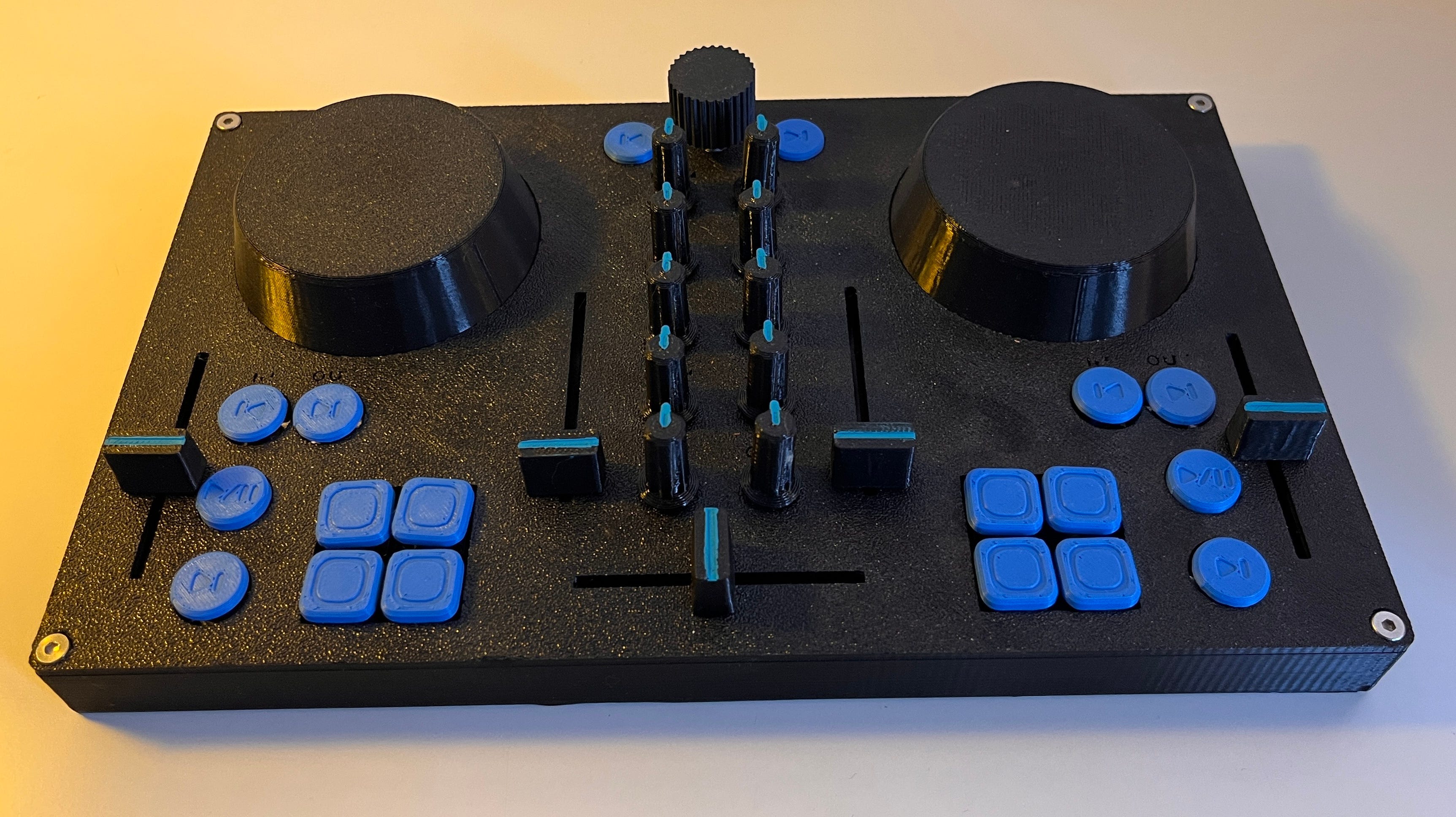
Option 2 - Jueta DIY DJ Controller
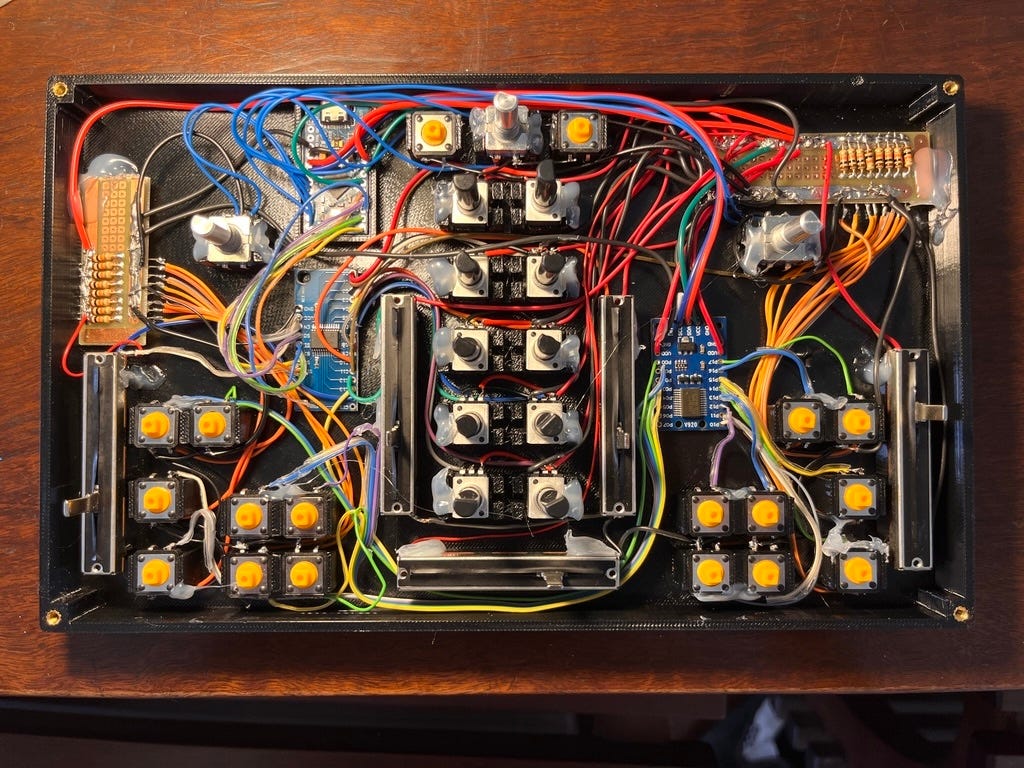
Inspired by the MandicLab, version 1 of Jeuta’s controller adds additional performance pads, Gain, track selection/load and 3-band equalisation. Critically from the perspective of my personal use-case its feature set exceeds any of the commercial options available on the market today.
While PCB designs are in progress these have not been completed, so the Jueta still relies upon point-to-point wiring. The project seems to have stalled and perhaps lacks direction, with the original developer proposing a radical version 2 redesign around an alternative ESP32 SoC featuring onboard audio monitoring.
Verdict:
A significant deficiency of both devices is the absence of audio monitoring control, namely Channel-1, Channel-2, Main. The Jeuta is the more featureful while the MandicLab has progressed further along the development path.
The PCB is the determining factor. The MandicLab is the most appropriate option today though a Jueta with PCB and audio monitoring buttons will blow it out of the water.
SBC
SBCs are not what they were. The memory shortage has impacted these devices significantly and the low cost / low power consumption model is nowhere near as compelling as it was just a few years ago. Exacerbating this trend is the resource consumption overhead of DJing software and audio processing, which approaches and even exceeds the hardware capabilities of SBCs including the last generation Raspberry Pi 5.
Realtime STEM separation, granular time stretching, high sample rates and effects are resource intensive operations requiring compromise or even sacrifice on SBCs, operations which slightly more expensive hardware handles with ease.
Another constraint is the absence of analogue audio on the latest iteration of the Raspberry Pi 5 SBC.
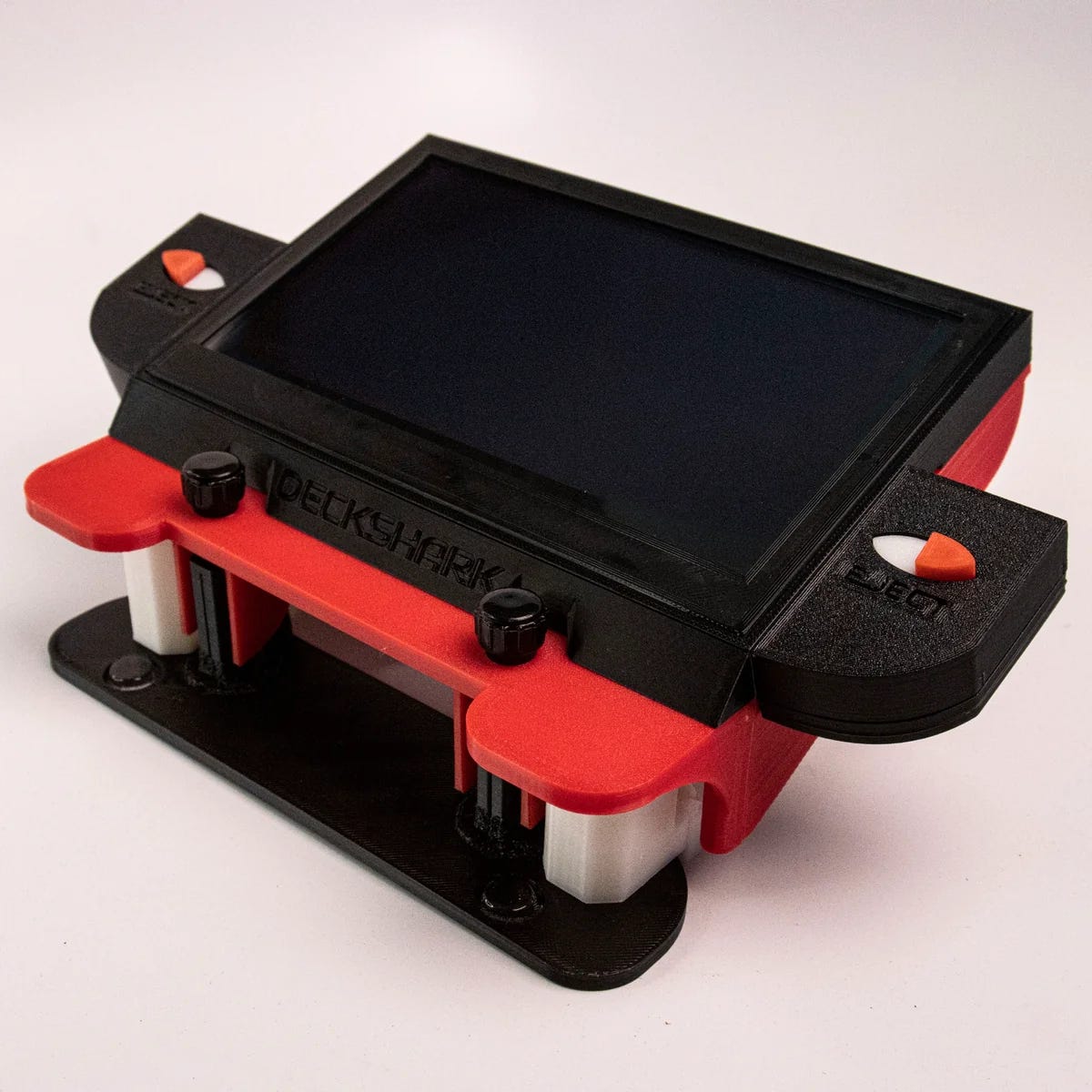
The Deckshark Mako device appears to have been built around Raspberry Pi 5 and stripping down Mixxx in their BiteDJ fork was partially motivated by the hardware constraints. The current iteration is designed for use in conjunction with the Pioneer DDJ-FLX4 model and its predecessor, and doesn’t include analogue audio onboard.
While Deckshark has proposed onboard audio in a subsequent hardware revision it is unsuitable for use with a strictly MIDI controller such as the DIY controllers mentioned above, as neither the SBC or the controller possess analogue signal outputs.
The upcoming (and proprietary) Stembox unit appears to address similar audio output limitations.
Option 1
Deckshark Mako version 2 (when released) with onboard audio outputs running their BiteDJ fork of Mixxx on top of their proprietary(?) realtime operating system, Shark Audio OS.
Option 2
Raspberry Pi 5 with DAC Hat and Audio Amplifier running either BiteDJ or Mixxx-Pi
Option 2 doesn’t exist yet. As far as I can determine there aren’t any commercial or open source SBC solutions which include analogue outputs. There are only two hardware devices in a potential Open Source solution and either the controller or the SBC needs to perform this function.
It’s a project which doesn’t strike me as particularly challenging. The addition of a DAC Hat daughterboard to a Raspberry Pi 5 and a small headphone amplifier module to convert the line level output is not an unusual hardware configuration. Certainly standard enough for a dedicated Mixxx Pi configuration build scripts to handle.
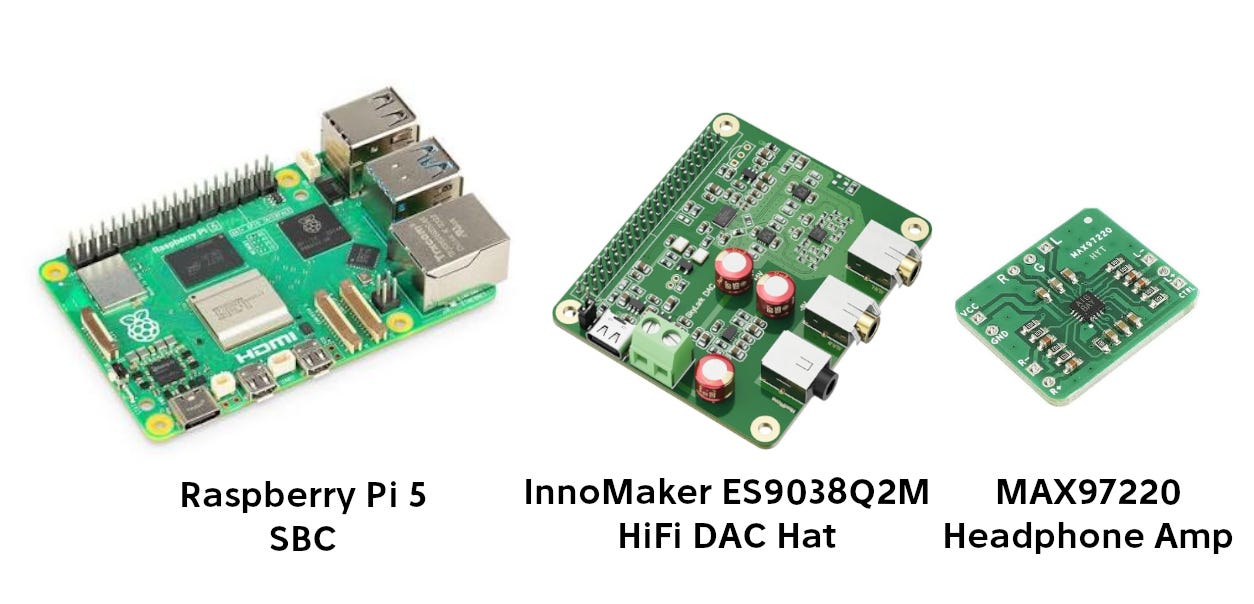
Option 3
Android tablet with attached USB audio interface.
DJ software exists for phone OSes, attractive for the inclusion of a native touchscreen, and Mixxx version 3.0 with its QML interface is targeting phones and tablets. The deficiency is analogue output with most (all?) tablets and phones constrained to one audio output path. The solution is the addition of a class compliant USB audio interface with six outputs for Headphones, Booth and Main.
Verdict:
As Mako and BiteDJ (and underlying Shark Audio RTOS) are existing products, Deckshark is more likely to be first to market with a suitable SBC, including an Audio HAT daughterboard. Tablet/Phone + Audio Interface is expensive and cumbersome.
Summary
Open Source has a habit of commoditising markets and while none of the three components discussed above have reached the necessary maturity, the potential of their convergence to disrupt the entry level market is in my opinion, substantial.
The optimal solution for my use case consists of these components:
Mixxx version 3.0, with a QML interface.
The Jueta controller, with PCB and audio monitoring buttons
A Pi 5 + DAC Hat + Amp running a stripped down Linux
The third item will probably become a personal project, as I don’t see anyone else building it.
The viable solution for my use case simply consists of the Jueta controller. Recall, all I personally need is a controller I can use sitting at my desk. Once the Jueta is easier to construct with a PCB I’ll be recommending it widely. Even to non-DJs using such a controller essentially as a glorified remote control for music management is pretty compelling, it seems to me.
From a broader perspective the future for Open Source / Open Hardware in the DJ market seems bright. While none of the projects mentioned above are there quite yet they’re on the cusp, and their convergence offers some tantalising possibilities, it seems to me.
Open Source has a habit of iterating rapidly. That which is crude today is compelling tomorrow.
-SRA. Auckland, 3/X 2026.
References
https://mixxx.org/
https://github.com/TeamDeckshark/bitedj
https://www.deckshark.us/
https://mandiclab.com/projects/djc-diy/
https://github.com/mandiclab/djc-diy
https://www.youtube.com/channel/UC5X14oUTwiCF-8Ja3pSoD-w
https://github.com/jueta/DIY_DJ_Controller
https://stemboxdj.com/
https://www.inno-maker.com/product/hifi-dac-pro/
https://www.analog.com/en/products/max97220.html
https://github.com/fayaaz/mixxx-pi-gen
https://www.digitaldjtips.com/stembox-turns-any-dj-controller-into-a-standalone/
https://www.digitaldjtips.com/deckshark-mako-another-way-to-ditch-the-laptop/